
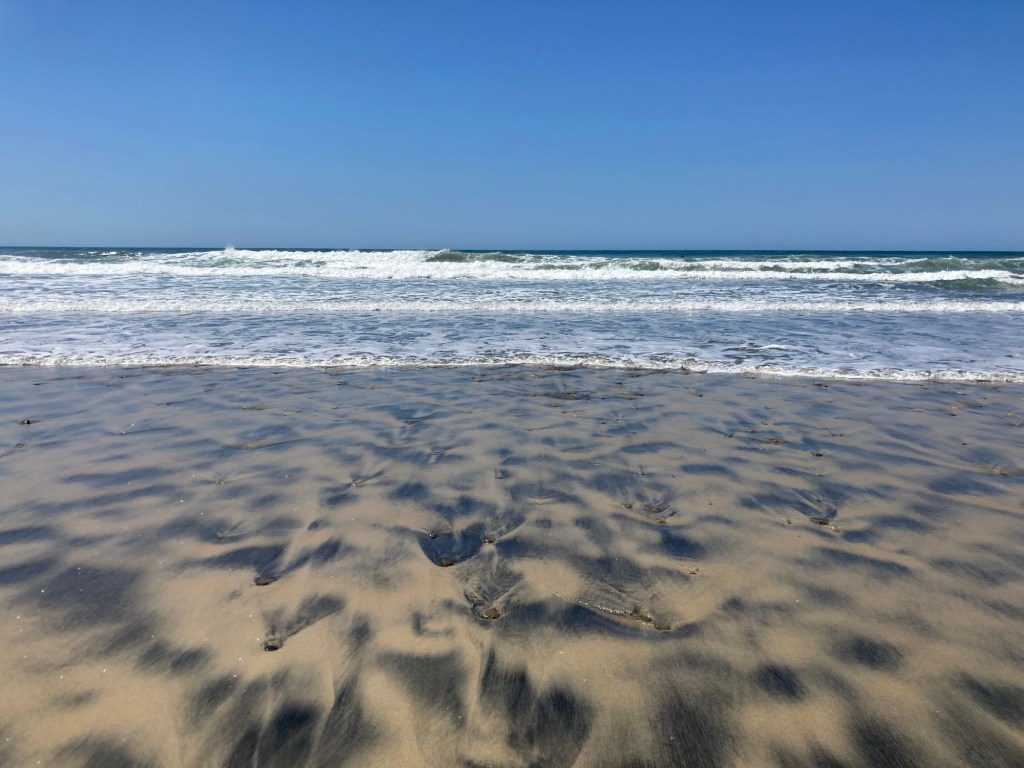
A beach in San Diego, California, where sand mining has been banned, Taken 2024.
Inside almost every building, bridge, and road is a crucial but underappreciated commodity: sand. Modern human society and industry is built upon sand, making it the most consumed resource other than water. However, sand is becoming increasingly scarce, and with demand continuing to rise, a severe sustainability crisis is developing, which the United Nations Environmental Programme has called “one of the greatest sustainability challenges of the 21st Century.” And like any other important but scarce resource, people are fighting for sand more than ever, often through corrupt and even violent means.
Pillars of Sand
The world’s sand demand has skyrocketed in recent years. Sand’s chemical inertness and durability make it an essential ingredient of concrete, mortar, and asphalt. The global construction boom means that between 2008 and 2019, sand demand has nearly tripled. This boom is mainly fueled by developing countries where an increasingly wealthy and urbanized population needs housing and infrastructure. China alone uses 20 billion tons of sand annually, enough to cover all of Italy an inch deep.
This demand far exceeds natural replenishment levels of water-eroded sand, which, unlike desert sand, is angular and rough, allowing its grains to bond to each other and cement. This type of sand is found chiefly on beaches, riverbeds, and seabeds. However, water-eroded sand only comprises a small fraction of the world’s sand, meaning that Earth’s usable sand resources are not only finite but scarce. Based on current trends, humanity is set to run out of sand by 2050.
These scarcity problems are made worse by the fact that sand causes severe environmental damage and erosion. Studies conducted by the World Wildlife Fund have concluded that collecting sand from riverbeds and beaches causes severe wildlife destruction and coastal erosion. These effects mean that more countries are beginning to shut down sand dredging operations, making this resource even more scarce.
Sand Wars
Illegal sand cartels already operate around the world, particularly in highly populated areas with large informal economies that make government oversight difficult. These cartels often murder police, angry locals, and journalists who attempt to expose their activities by ramming their trucks into them. In one case, a journalist in India was shot dead for investigating corrupt sand mining deals. In Kenya, a police officer was murdered with poison arrows and machetes by a group of young men.
The world’s sand demand has skyrocketed in recent years. Sand’s chemical inertness and durability make it an essential ingredient of concrete, mortar, and asphalt. The global construction boom means that between 2008 and 2019, sand demand has nearly tripled. This boom is mainly fueled by developing countries where an increasingly wealthy and urbanized population needs housing and infrastructure. China alone uses 20 billion tons of sand annually, enough to cover all of Italy an inch deep.
Sand wars also extend to international politics. A prime example of this is Singapore, a small but wealthy country in Southeast Asia. As its population skyrocketed from 1.6 million in 1960 to 5.7 million in 2020, it nurtured demand for construction materials for buildings and land reclamation. However, its own sand supplies ran out in the 1980s, so Singapore began imported sand from neighboring countries. However, those neighbors soon realized the horrors of sand mining after their land, including 24 Indonesian islands, eroded away. This was not only a matter of national pride but also maritime territorial security. In addition, sand mining destroyed five square kilometers of land every year in Vietnam’s Mekong Delta and caused a severe reduction in fish yields in Malaysia’s Kelantan River. These effects led to those countries enacting bans or restrictions on sand exports in the late 2000s.
However, Singapore did not back down. It financed smugglers who forged paperwork and bribed corrupt officials. In one notable case, 34 Malaysian civil servants were caught facilitating the sand trade in exchange for sexual favors. Many governments’ inability or unwillingness to enforce the new laws exacerbated the problem. Singapore’s actions led to accusations by Indonesian Greenpeace officials that Singapore was launching a “sand war” against its neighbors.
A United Nations Environmental Programme report stated that Singapore’s actions may be a reflection of the future. The Arab Gulf states, in particular, are considered to be a prime candidate for future sand wars since their sand imports from Australia are being threatened by stricter environmental regulations. China has already begun to consolidate sand mining rights around the world, including Africa, as its domestic sand industry’s environmental impacts have become untenable. In fact, The Economist wrote in 2015 that China’s ambitions over the South China Sea are partially caused by its need to control the plentiful sand resources there. China and other countries’ willingness to risk tensions suggests the importance of sand resources to national security. In fact, some have called sand “The New Oil.”
A Grain of Hope
Humanity’s thirst for sand seems endless and unquenchable, however, the nightmare of sandless beaches and crumbling infrastructure is not inevitable.
The sand crisis has always remained a problem outside the public eye because unlike resources such as petroleum or water, people do not consume it directly. However, in 2019, this underappreciated problem entered the UN Environmental Assembly for the first time and a resolution regarding mineral resource governance was passed. This landmark development means that public awareness is increasing, and governments are taking action and implementing numerous available solutions.
Firstly, regulations are beginning to be enforced more strictly. China has begun cracking down on illegal sand mining, which has proven effective in combatting erosion. Even though regulations have failed in some places, they are effective if enforced. In most developed countries, sand mining from beaches is illegal, and sand dredging is highly regulated and taxed, which has proven effective in curtailing erosion. In fact, the United States already shut down its last coastal sand mine in 2017 and switched to other sources, including a promising new technology: manufactured sand.
This technology involves crushing rocks or used concrete artificially in massive machines. Manufactured sand, or M-sand, promises to be more sustainable and customizable. It is also cheaper because it can be produced closer to construction sites, reducing transportation costs. However, the machines needed to create it are expensive and unavailable in some places. Furthermore, M-sand is too angular, which changes the properties of the concrete and means that more cement is needed. In addition, the production process creates tiny microfine particles which harm strength. M-sand’s quality issues mean it can comprise only a portion of the aggregate.
Japan has already managed a complete transition to M-sand when it banned all dredging activities in 1990. Since then, it has become a leader in M-sand technology, even creating a process for producing sand that can comprise the entire aggregate, though it is not yet cost-effective.
Generally, the sand crisis is slowly resolving as new technologies and regulations combat illegal sand mining. However, it still remains an issue outside the public eye, which slows down progress.
The sand crisis is a byproduct of unsustainable development, where humans greedily and myopically steal from nature, but it also shows our ingenuity and ability to create solutions during a crisis. Hopefully, this problem will show the best of humanity, and rather than fighting for them, we preserve the world’s beautiful beaches and rivers for generations to come.
 eric's Writing Portfolio
Leave a comment